
Glass Elevators Price in Delhi
Published on 18 Jul 2025
5 minutes read
✅ Introduction
Step into a new world of luxurious living in Delhi—where a lift is no longer just a lift, but a work of art in motion. Glass elevators, which were once at home in Lutyens' grand palaces or a newly finished penthouse in Gurugram, are capturing the spotlight. No longer simply in malls or large luxury hotels, these transparent glass marvels are making a splash in homes and elevating not just your floors but also your lifestyle. But with elegance comes the big question:
How much is a glass elevator in Delhi?
Let's explore what they are all about, how pricing works, and perhaps why this investment is the best decision you will make for your home.
✅ What Exactly Are Glass Elevators?
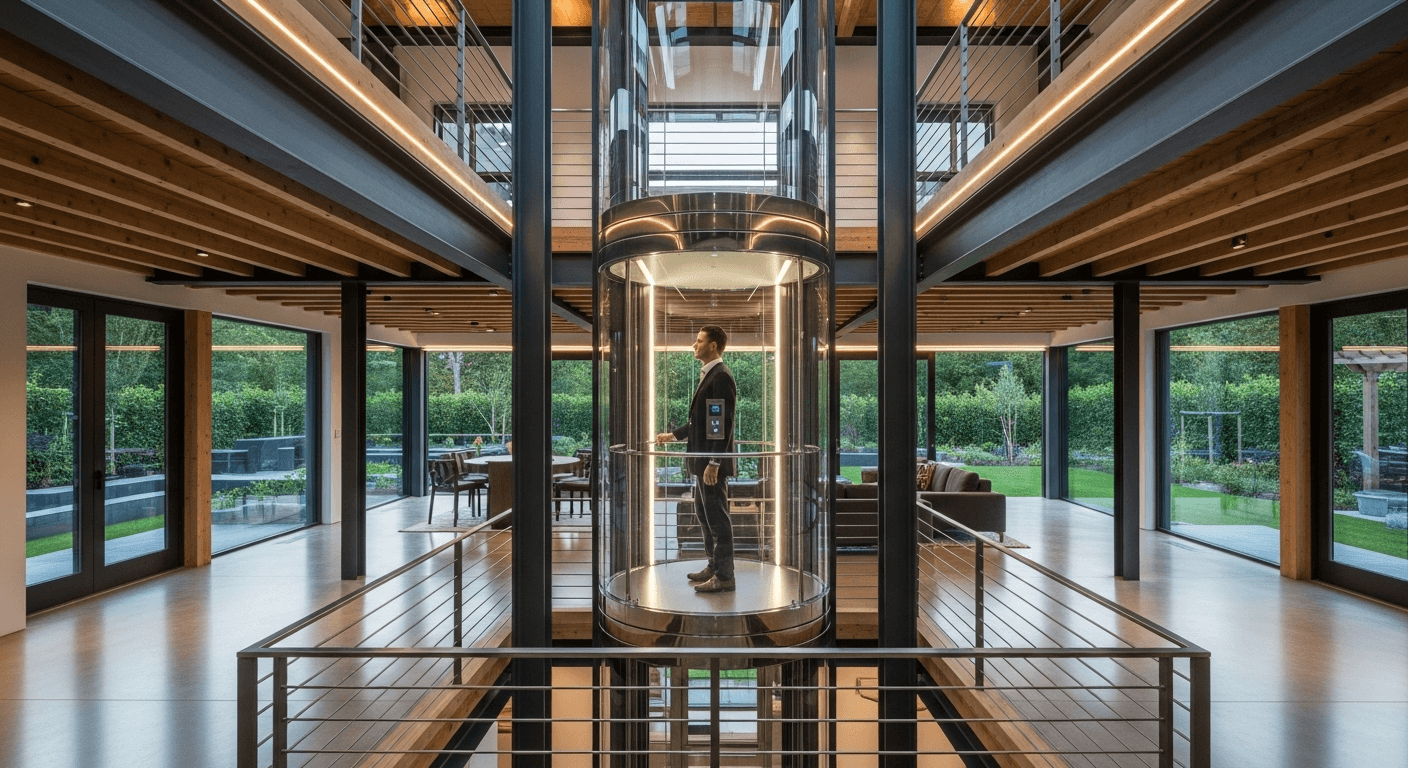
Imagine this: a glass capsule passing silently through the heart of your home. You are surrounded by daylight, watching your interiors from many views. That's the beauty of a glass elevator - also known as a panoramic lift. It makes an architectural statement, but a ride in a glass elevator is much more than just a voicing of your tastes between floors.
📌 Core Features:
🔹 360° panoramic view through transparent/acrylic glass
🔹 Compact, space-saving shaft
🔹 Whisper-quiet operation
🔹 Elegant, futuristic design
🔹 Indoor or outdoor installation flexibility
Whether you choose clear, frosted, or tinted finishes, a glass elevator seamlessly fits into your interior design—be it modern, traditional, or industrial.
✅ Why Are Glass Elevators Trending in Delhi Homes?
Delhiites have always known luxury. But luxury today is no longer about gold and glitter. It is determined by sophistication and seamless integration. From the large bungalows of South Delhi to the luxury duplexes of Noida, glass elevators have become synonymous with elevated living. No longer considered just an add-on, glass elevators are now the focal point of your foyer, atrium or exterior facade.
📌 Urban Space, Vertical Living
With no land to spare, vertical living is inevitable in Delhi. Homes have literally risen in floors rather than spread out - and a glass elevator is how you navigate those floors in style - especially when:
🔹 Duplex & triplex homes
🔹 Builder floors
🔹 Villas with rooftop gardens
And since vacuum elevators take up minimal space, they’re perfect for retrofitting into older constructions.
✅ Top Benefits of Installing a Glass Elevator in Delhi
📌 Beautiful Aesthetic Value
With its transparent walls and sleek design, a glass elevator can effortlessly turn any space into a visual masterpiece. It enhances the special quality of lighting, expands the sense of visual space, and generates a "wow" factor unmatched by traditional elevators.
📌 A World With Light
The cabin of a glass lift has natural light pouring in - it becomes much more spacious, airy, and breathable. This feature is especially advantageous for homes with limited windows or narrow stairwells.
📌 Space-Smart
No pit? No problem. These days, many glass home lifts (particularly pneumatic ones) don't require a machine room, shaft, or deep pit - great for compact apartments in Delhi.
📌 Accessibility & Elegance
Provide independence to your elderly family members or guests with restricted mobility while maintaining the aesthetic integrity of your home.
📌 Adds Value
Think of a home lift as ROI moving! A home with an installed glass lift stands out in a fierce market - and can achieve a higher selling price.
✅ What Affects Glass Elevators Price in Delhi?
Let’s break down the biggest cost contributors:
📌 Drive Mechanism
Each elevator type has its own cost bracket:
| Drive System | Features | Cost Range |
|---|---|---|
| Vacuum | No pit, energy-saving, silent ride | ₹12–₹18 Lakhs |
| Hydraulic | Smooth but space-hungry | ₹9–₹15 Lakhs |
| Traction | For larger loads; often commercial | ₹15–₹22 Lakhs |
Vacuum elevators are often chosen for homes due to low structural demands and ease of installation.
📌 Number of Floors
A simple 2-stop lift costs significantly less than a 4-stop panoramic capsule. Every additional stop adds material, time, and tech complexity.
📌 Level of Customization
Want a frosted glass shaft? Gold-toned rails? Voice control? Bluetooth music system? Each feature adds layers of sophistication—and pricing.
📌 Glass Quality & Finish
🔹 Tempered = Standard safety
🔹 Laminated = Extra durability
🔹 Frosted/Tinted = Premium look
🔹 Bullet-Resistant = Ultra-high-end (rare)
📌 Ease of Installation
New construction = smoother workflow. Retrofit = more custom framing, possible civil work = slightly higher cost.
📌 Indoor vs Outdoor
Outdoor models need weatherproofing, stronger glass, and support systems—which increases cost.
✅ Estimated Glass Elevators Price in Delhi (2025 Snapshot)
| Elevator Type | Price Range (INR) | Typical Stops |
|---|---|---|
| Basic Glass Elevator | ₹9 – ₹12 Lakhs | 2 Floors |
| Premium Vacuum Glass Lift | ₹12 – ₹18 Lakhs | 2–3 Floors |
| Designer Panoramic Capsule | ₹18 – ₹25 Lakhs | 3–4 Floors |
| Fully Customized Lift | ₹25 Lakhs & Above | 4+ Floors |
Tip: Prices vary by home layout, installation ease, and features. Always ask for a site visit and quote before finalizing.
✅ Is a Glass Elevator a Smart Buy in Delhi?
Absolutely—here’s why:
🔹 Blends luxury with functionality
🔹 Adds future-ready mobility to aging homes
🔹 Acts as a value addition in high-end real estate
🔹 Offers low maintenance (especially pneumatic models)
🔹 Reduces long-term operational cost with energy-efficient tech
In essence, a glass elevator isn’t just a product—it’s an investment in future-proof living.
✅ How to Choose the Right Glass Elevator in Delhi
📌 Step 1: Define Your Needs
🔹 How many stops?
🔹 Indoor or outdoor?
🔹 Weight capacity?
🔹 Is it for function, luxury, or both?
📌 Step 2: Coordinate with Your Architect
The elevator should enhance—not disrupt—your interiors. Smart planning is key.
📌 Step 3: Set a Realistic Budget
Don’t just budget for purchase. Factor in maintenance, energy usage, and service support.
📌 Step 4: Prioritize Brands with Service in Delhi
Choose local support teams for prompt repairs and parts availability.
📌 Step 5: Safety Is Non-Negotiable
Look for:
🔹 Emergency stop & lowering
🔹 Backup power
🔹 Anti-skid flooring
🔹 Child-lock system
🔹 Intercom/emergency alarm
✅ Where Are Glass Elevators Most Popular in Delhi?
🔹 South Delhi: Hauz Khas, Jor Bagh, Vasant Kunj – Classic + Contemporary
🔹 Gurugram: DLF Phase 1–5 – Smart villa integrations
🔹 Noida: Sector 150, 93B – Stylish duplex apartments
🔹 Dwarka & Faridabad: Builder floors embracing smart vertical design
✅ What’s the Installation Timeline?
| Stage | Time Needed |
|---|---|
| Site Visit & Planning | 2–3 Days |
| Design Finalization | 1–2 Weeks |
| Manufacturing & Transit | 4–6 Weeks |
| Installation & Testing | 1 Week |
| Total Timeline | 6–8 Weeks (on average) |